
How a remote ranch in Matão gave the Rolling Stones their most American song
The Rolling Stones have always been understood as a deeply British project — London boys channeling Chicago blues through the filter of colonial longing. So it’s a genuine strangeness of rock history that one of their most archetypally American songs — a honky-tonk anthem so thoroughly Texan in spirit that it practically smells of sawdust and Lone Star — was conceived on a coffee plantation in the interior of São Paulo state.
The story begins at the end of 1968. The Stones had just wrapped the Rock and Roll Circus filming — an event that captured a band at a creative apex and an interpersonal nadir. Brian Jones was months from death. Mick Taylor hadn’t yet joined. The pressure was immense: legal troubles, intra-band fracture, the sheer weight of becoming the biggest rock band on earth during a year that seemed determined to break everything apart.
Keith Richards and Mick Jagger needed air. They sailed from Lisbon to Rio de Janeiro, arriving around 29 December 1968, accompanied by Marianne Faithfull and Anita Pallenberg — the latter visibly pregnant with Marlon Richards. They booked into the Copacabana area for New Year’s. The press found them immediately. Hotel security clashed with photographers. The escape they needed was already collapsing.
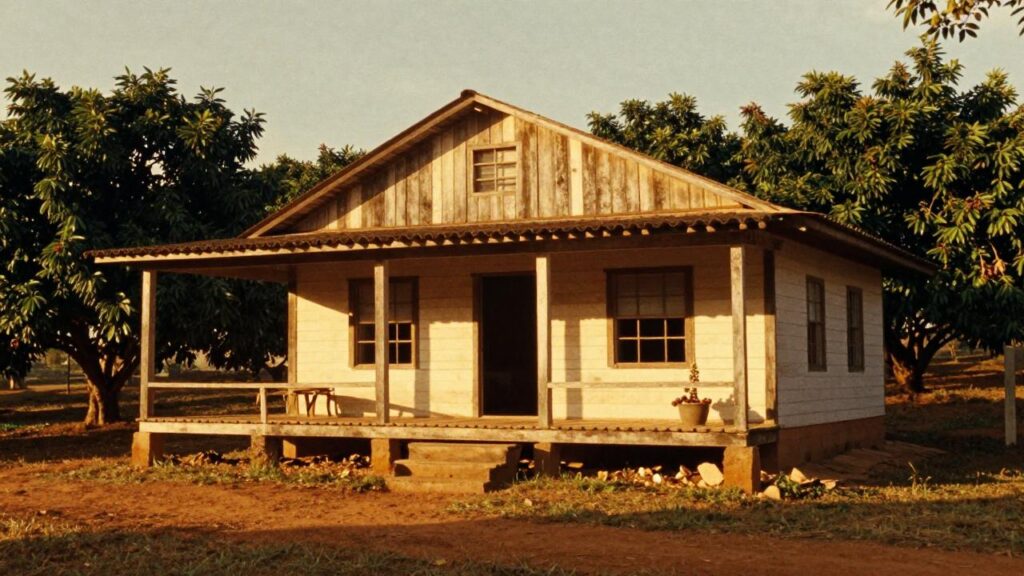
What followed was the intervention of Walther Moreira Salles — Brazilian banker, diplomat, founder of Unibanco, and a man who understood both power and discretion. He offered them his Fazenda Boa Vista, a working ranch in Matão, deep in the interior of São Paulo state, roughly 300 kilometers from the city. The Stones accepted. They stayed approximately two weeks.
Security was tight. Photographers and locals were kept at a distance. What the ranch offered was something the Stones hadn’t experienced in years: silence, sky, horses, and the particular unhurried rhythm of rural Brazilian life. Caipiras — the rural Brazilians of the interior — moved through their days around the visitors. The landscape was open, agricultural, pastoral. In a strange transcontinental alchemy, it reminded Richards and Jagger of nothing so much as the American West.
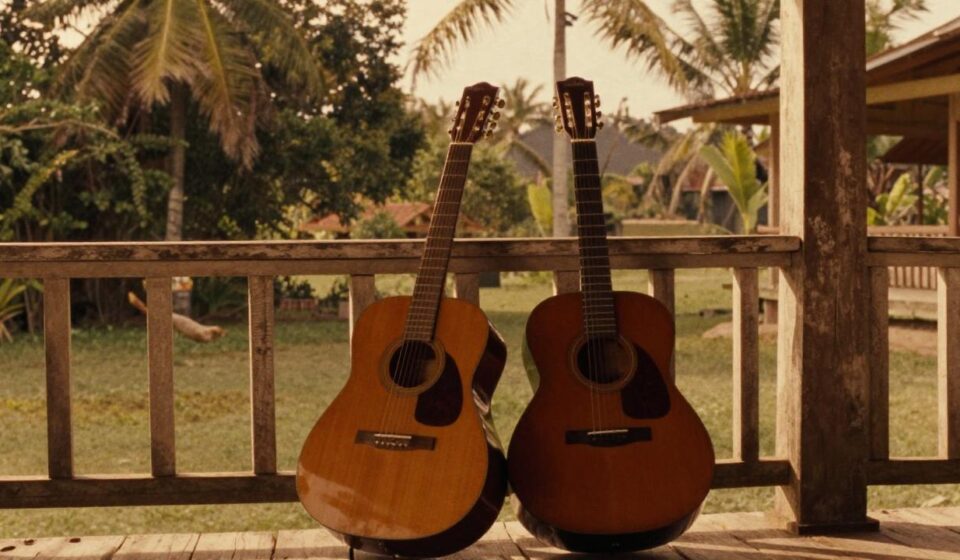
They sat on the porch of the ranch house, feet up, guitars in hand, and started fooling around with a Hank Williams-style country idea — an acoustic number, Jimmy Rodgers lineage, three chords and a walking pace. Richards described the feeling: they imagined themselves cowboys in Texas or Arizona, transplanted by the openness of the Brazilian interior into a mythic American space that existed more in song than in geography. The song that emerged was “Country Honk” — the original, acoustic, unvarnished version of what would become “Honky Tonk Women.”
There’s a detail Richards has told and retold, in interviews and in his memoir Life, that captures something essential about the place: flushing the toilet caused black blind frogs to jump out. This is not the texture of a London flat or a Paris studio. This is the texture of somewhere genuinely elsewhere — a place where infrastructure meets jungle and the jungle wins. The frogs are the signature of authenticity in the story, the proof that the songwriting wasn’t staged but happened in a setting so foreign to the Stones’ usual environment that it rewired their instincts.
The ranch stay itself was richer than a mere writing retreat. Local Brazilian accounts — collected in part in a 2013 student documentary, Aliens 69: Quando os Rolling Stones invadiram Matão — preserve eyewitness memories: casual days by the pool, guitars passed around, canned beer (still a novelty in Brazil at the time), a makeshift festa junina with a local accordionist, and a visit to an umbanda terreiro in nearby Araraquara. These are the textures of cultural encounter, not tourism. The Stones weren’t observing Brazil from behind glass; they were inside it, however briefly.
None of this cultural immersion directly shaped “Country Honk” — the song’s inspiration was pointedly American, a country-music pastiche born of imaginative displacement. But the conditions that allowed that particular creative act — the removal from all familiar stimuli, the radical quiet, the sense of having slipped through a door in the world into somewhere unmapped — those conditions were Brazilian.
Months later, back in London, “Country Honk” was electrified. Mick Taylor’s arrival and Richards’ exploration of open-G tuning — influenced in part by Ry Cooder — transformed the gentle acoustic country number into the riff-driven juggernaut released as the “Honky Tonk Women” single in July 1969. The country skeleton survived: the honky-tonk woman archetype, the walking tempo, the narrative of a man adrift among barrooms and divorces. But the flesh changed entirely. What was porch-light and acoustic became stadium floodlight and electric. Both versions appeared on Let It Bleed later that year — the electric single and the acoustic “Country Honk” sitting side by side like photographs of the same person at different ages.
Keith has occasionally referred to the location as “Mato Grosso” — a name that translates literally as “thick brush” or “deep country” and that functions almost too perfectly as a metaphor for wherever the Stones went to disappear. Brazilian sources widely treat this as a conflation or broad shorthand: the documented ranch, the invitation, contemporary reporting, and local testimony all confirm Matão in São Paulo state as the actual site. But the misnomer is revealing. What Richards remembers is not a coordinate but a feeling — the feeling of being somewhere so remote that the map blurs and the name becomes approximate. In that sense, “Mato Grosso” may be the more honest recollection: not a place but a state of removal.
Jagger, for his part, has corroborated the story in his own more precise way, recalling the remote coffee-plantation ranch outside São Paulo and the casual sessions by a river or on the porch. In 2016, during the Stones’ Latin America tour — documented in Olé Olé Olé!: A Trip Across Latin America — Jagger and Richards revisited the story on camera while back in the São Paulo area, even recreating elements of the original acoustic writing session. The circle closed. The song returned to the place that made it possible.
(It’s worth noting, as a point of separation, that Jagger’s earlier 1968 Brazil trip with Faithfull — which included Bahia and exposure to candomblé and samba traditions — is more commonly linked to “Sympathy for the Devil.” That was a different journey, a different muse, a different Brazil.)
The Matão episode stands as something rare in the Stones’ catalogue: a song with a verifiable birthplace, a documented moment of origin that can be traced to a specific porch on a specific ranch in a specific corner of a specific country. Most rock songs emerge from studios and hotel rooms and soundchecks — interchangeable spaces that blur together. “Honky Tonk Women” came from somewhere with black blind frogs in the plumbing and a local accordionist playing for tipsy Englishmen at a festa junina. It came from a place that was itself.
The song went on to become one of the Rolling Stones’ biggest hits — a piece of mythic Americana that was, like so much of American mythology, actually assembled somewhere else. That may be the deepest truth in the story: the most convincing American songs are often written by people far enough from America to see it clearly.
Sources: Keith Richards, Life (2010); Rolling Stones interviews; Jagger recollections in Olé Olé Olé!: A Trip Across Latin America (2016); Aliens 69: Quando os Rolling Stones invadiram Matão (2013); contemporary Brazilian press; local oral histories from Matão and Araraquara.